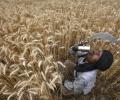
But the measures, particularly in agriculture, may not be enough to revive the sector and double the farm income, says S Mahendra Dev.
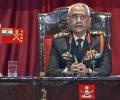
His comments came in the midst of the disengagement process between Indian and Chinese armies in Pangong Tso areas in eastern Ladakh where the two sides have been locked in a nine-month standoff.
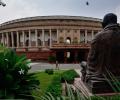
The session started on January 29 and was originally slated to end on April 8 but several members had urged Speaker Om Birla to end the session earlier as they focus on electioneering for the five assemblies.

The RBI has also been asked to consider displaying this information on its website.

To attract bidders, the government had decided to hive of around Rs 35,000 crore of the company's debt into a separate subsidiary, leaving around Rs 23,286 crore to be absorbed by the new bidder.

22 companies won bids for the 31 contracts on offer; 15 were new entrants to the oil and gas business. Three years on, none of them have started production.
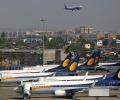
Banks want government to retain 40 per cent of Jet slots at all airports to ensure a new owner can kick-start operations soon after taking over.
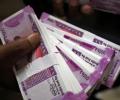
The major beneficiaries have been the ministries of roads and highways, railways and power

which currently does an average daily turnover of Rs 8,000 crore (Rs 80 billion) - almost twice that of the Bombay Stock Exchange - has been valued at $2.5 billion.

Budget in the medium term aims to kick-start the investment cycle.

The minister plans to reinstate the Railways as the backbone of the economy

'We are making a transition from governance to campaign mode.' 'The speed of execution is picking up,' says Union Minister Jayant Sinha.

The view is that the attention on the national team is fleeting, incidental and dependent on the results they produce.
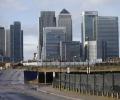
He is the man behind Blackstone's India strategy

Indeed, there were frauds, and the politician-banker-industrialist nexus played a role in the rise of NPAs, but governance issues in Indian banking are far more nuanced and complex, reveals Tamal Bandyopadhyay.

Boost to dairy sector will generate jobs

The business council aims to give impetus to trade.

The total earnings in Q1 rose 14.54 per cent, while working expenses grew at a measly 4.22 per cent.

Single window clearances for realty must.

When Nitin Gadkari took charge as Road Transport and Highways Minister in 2014, he had set a target of constructing 40 km a day in two years. But construction at this point is a mere 16 km a day. Megha Manchanda on what ails the road sector.

Secretary of State for Foreign Affairs William Hague and Chancellor of the Exchequer George Osbourne, heading the largest business and ministerial delegation ever, arrived in Mumbai, their first port of call, during a two-day visit to the country.

In 2011, India's share in global nanotechnology research publications had reached six per cent from a mere two per cent in the year 2000, the study found.

'Initially, Gift City was just another real estate project, but all that changed with Modi moving to New Delhi,' notes Tamal Bandyopadhyay.
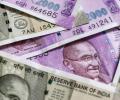
Post office savings deposit, recurring deposit accounts and the senior citizen savings scheme account have shown the highest growth in the current financial year.
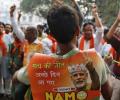
'Success will require political skill, not just economic expertise'

energy is India's binding supply-side constraint for inclusive growth.

IMF MD Christine Lagarde hailed the government's latest Budget.

Budget for women and children welfare increased from Rs 1,56,528 crores to Rs 1,84,632 crores for 2017-18

The money is expected to be disbursed by the lenders consortium led by SBI after the Jet management submits an operational plan on how it intends to use the money till May 7.


'Any future course of action towards active participation in the alliance when formed would need a lot of deliberation, long term vision and should be in our best national interests,' notes Commodore Vengalil Venugopal (retd).

Japanese Prime Minister Shinzo Abe's $12-billion loan at an incredibly low interest rate may have trumped China's aim to enter the enormous Indian Railways market, notes A K Bhattacharya.

'If you look at this Budget, except for the Rs 2 increase in petrol and diesel, there is no positive or negative impact from the Budget for the common man.'

Stepped up public expenditure must be accompanied by focused policies, advises Vinayak Chatterjee.
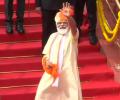
Prime Minister Narendra Modi delivered the customary Independence Day address to the nation after unfurling the Tricolour at the Red Fort. India is marking its 74th Independence Day under the shadow of the Covid-19 pandemic.
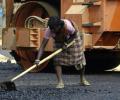
Most of these road contracts are spread across Andhra Pradesh, Haryana, Karnataka, Odisha, Rajasthan, Tamil Nadu, Uttarakhand and West Bengal, with the government struggling to restart them.

The Adanis', which already has won the bids to run six Airport Authority-built non-metro airports in Lucknow, Jaipur, Guwahati, Ahmedabad, Thiruvananthapuram and Mangalore, bid to enter the country's second busiest airport by buying out Bid Services Division Mauritius from MIAL was stalled after GVK chose to exercise its first right of refusal, and matched the Rs 1,248-crore offer that the Adanis made to the Bidvest in March.

Russian firms expand their footprint in India. And take bigger steps to do business with India's private sector.
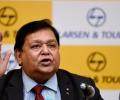
'Revival is happening slowly.' 'But that is, if the pandemic is controlled.'
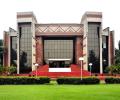
The one-size-fits-all approach adopted by the AICTE is not suitable for regulating business schools in India, argues Asish K Bhattacharyya.
